FODC carbon footprint
Our Commitment to Reducing Emissions
At Fermanagh and Omagh District Council (FODC), we recognise that greenhouse gas (GHG) emissions are a major driver of climate change and contribute to the Council’s environmental footprint. We are committed to monitoring and reducing these emissions as part of our wider climate change and sustainable development ambitions.
In February 2021, the Council published its Climate Change and Sustainable Development Strategy, followed by the launch of its Climate Change and Sustainable Development Action Plan in November 2021, becoming the first council in Northern Ireland to do so. Together, these documents set out our approach to tackling the climate emergency, supporting the transition to a sustainable and inclusive economy, and achieving ambitious decarbonisation targets.
By understanding our carbon footprint, improving energy efficiency and investing in lower-carbon solutions, we aim to reduce emissions across Council operations and make progress towards our climate commitments.
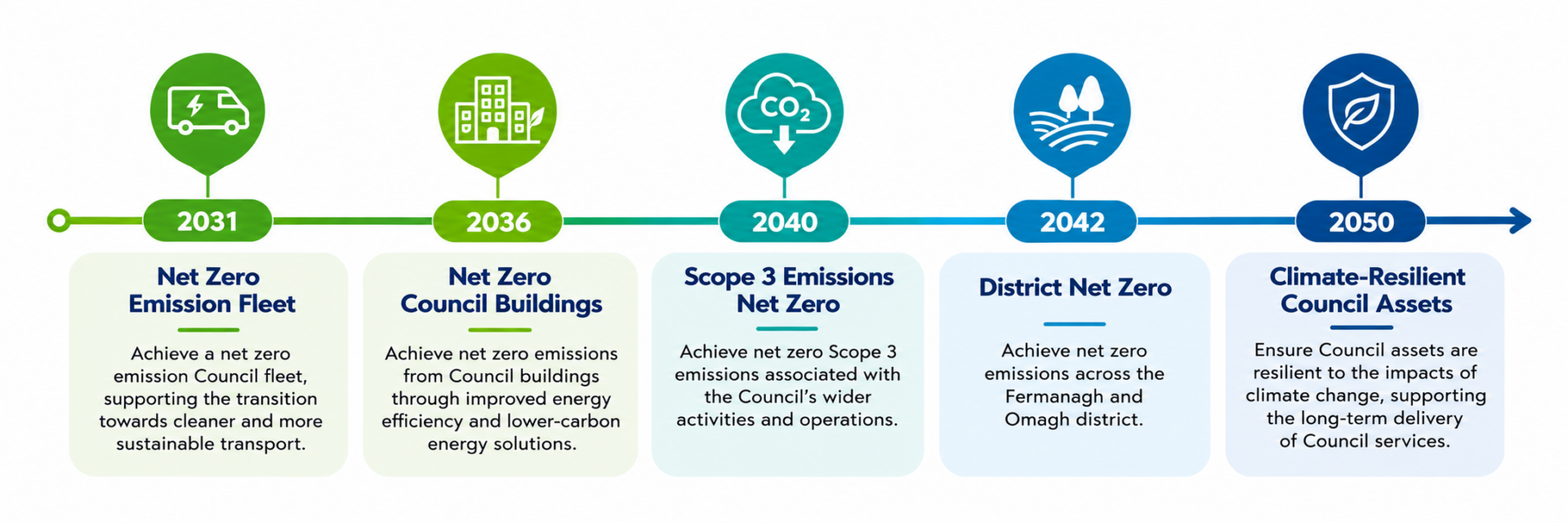
Our Climate Milestones
Fermanagh and Omagh District Council has set out a series of ambitious milestones to support its transition towards a low-carbon and climate-resilient future. These targets guide our efforts to reduce greenhouse gas emissions across Council operations and the wider district.
Where Do Our Emissions Come From?
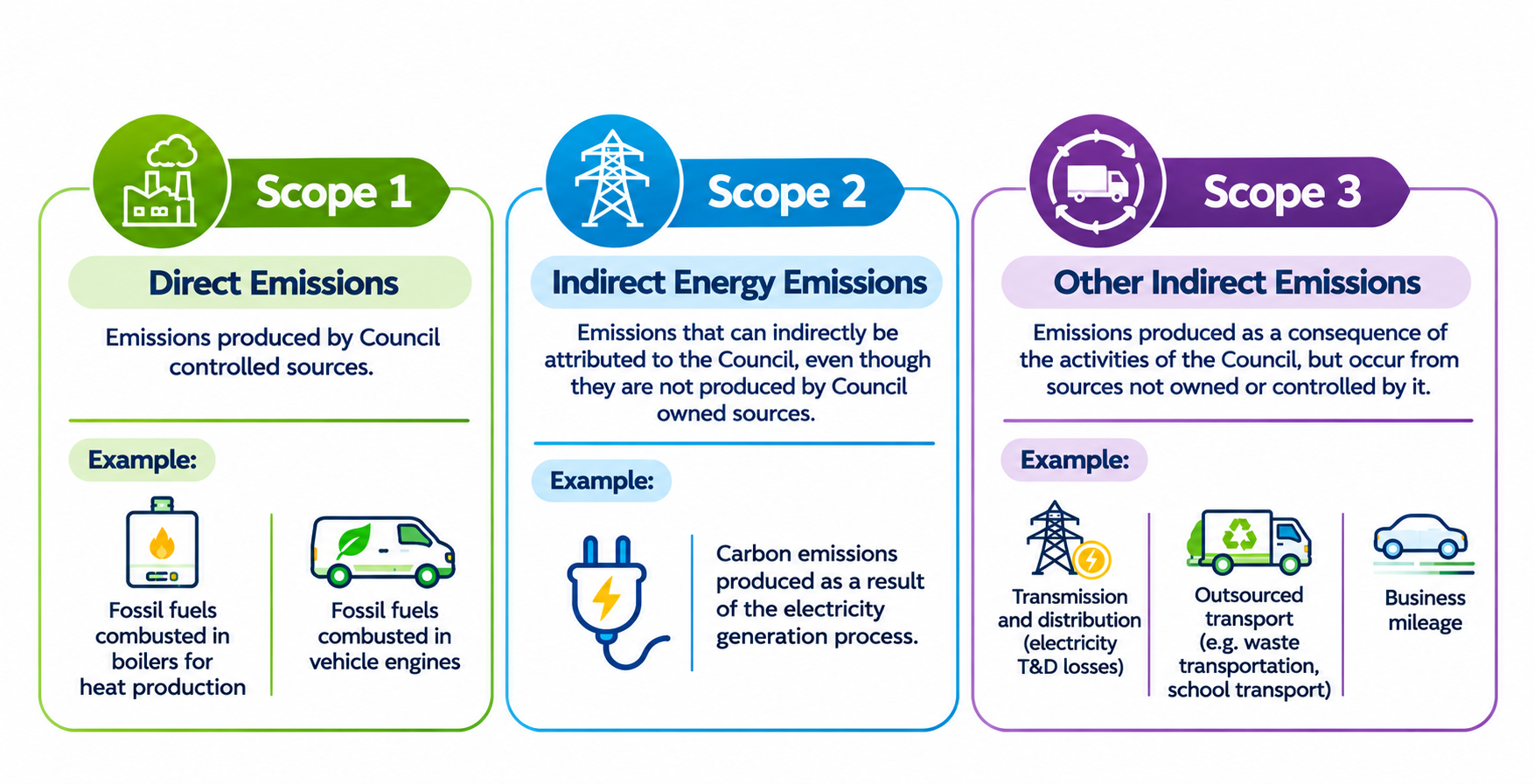
To better understand and manage our carbon footprint, Fermanagh and Omagh District Council categorises its greenhouse gas (GHG) emissions into three scopes: Scope 1, Scope 2 and Scope 3.
These categories help us identify where emissions come from, distinguish between direct and indirect emissions, and identify opportunities to reduce our environmental impact across Council operations and wider activities.
Our Greenhouse Gas Emissions in 2025/26
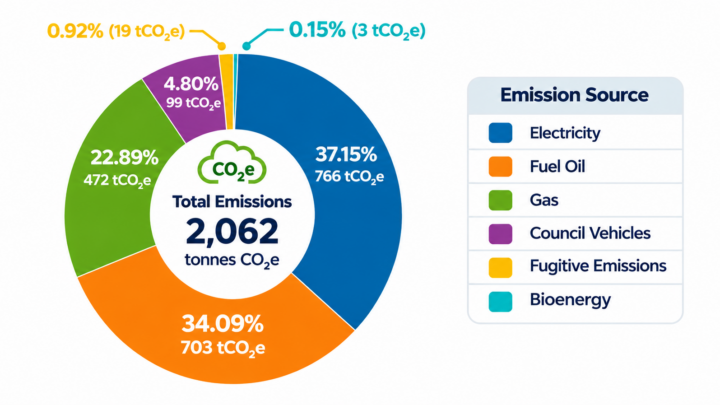
In the 2025/26 financial year, Fermanagh and Omagh District Council recorded a total of 2,062 tonnes of carbon dioxide equivalent (CO₂e) from Scope 1 and Scope 2 emissions.
The chart below illustrates the breakdown of these emissions by source, highlighting the contribution of electricity, heating fuels, Council vehicles and other operational activities to the Council’s overall carbon footprint (Figure 1).
Our Progress Towards Net Zero
Fermanagh and Omagh District Council is committed to reducing greenhouse gas emissions through energy efficiency improvements, lower-carbon technologies and greater climate awareness across the organisation.
Our Emissions Reduction Progress
By the 2025/26 financial year, the Council had achieved a 51.13% reduction in Scope 1 and Scope 2 greenhouse gas emissions, compared with the 2019/20 baseline year.
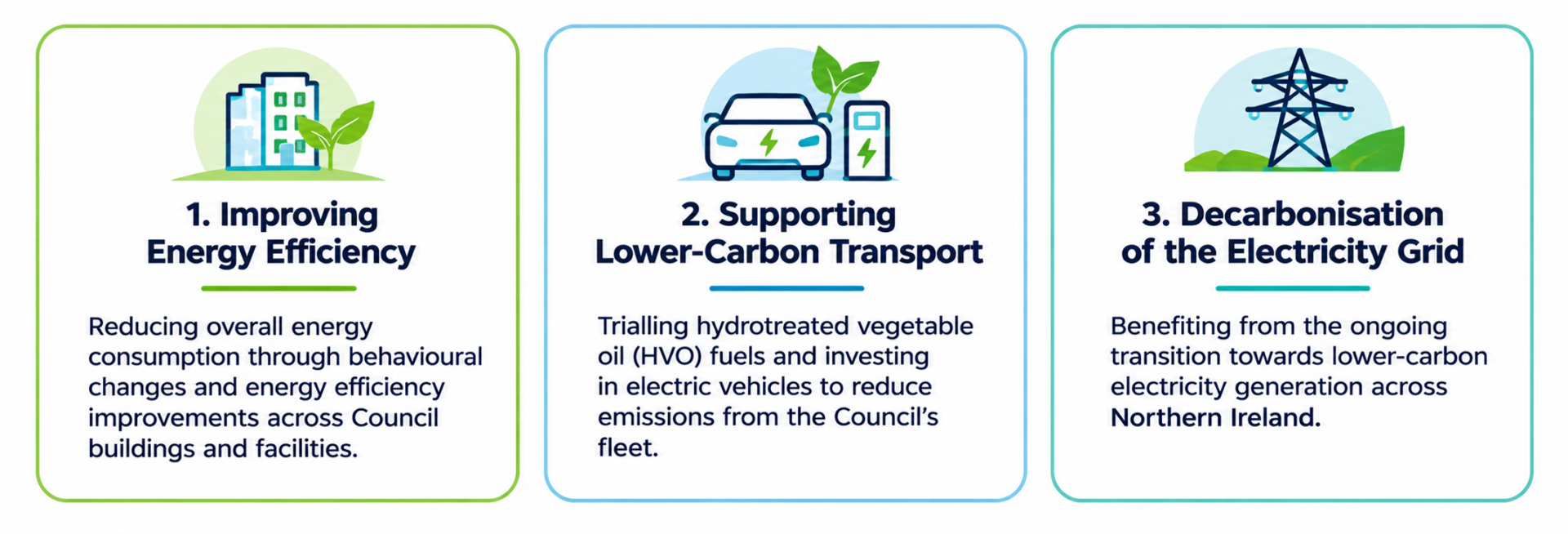
This progress has been supported by three key areas: