Hydrotreated Vegetable Oil (HVO)
What is HVO?
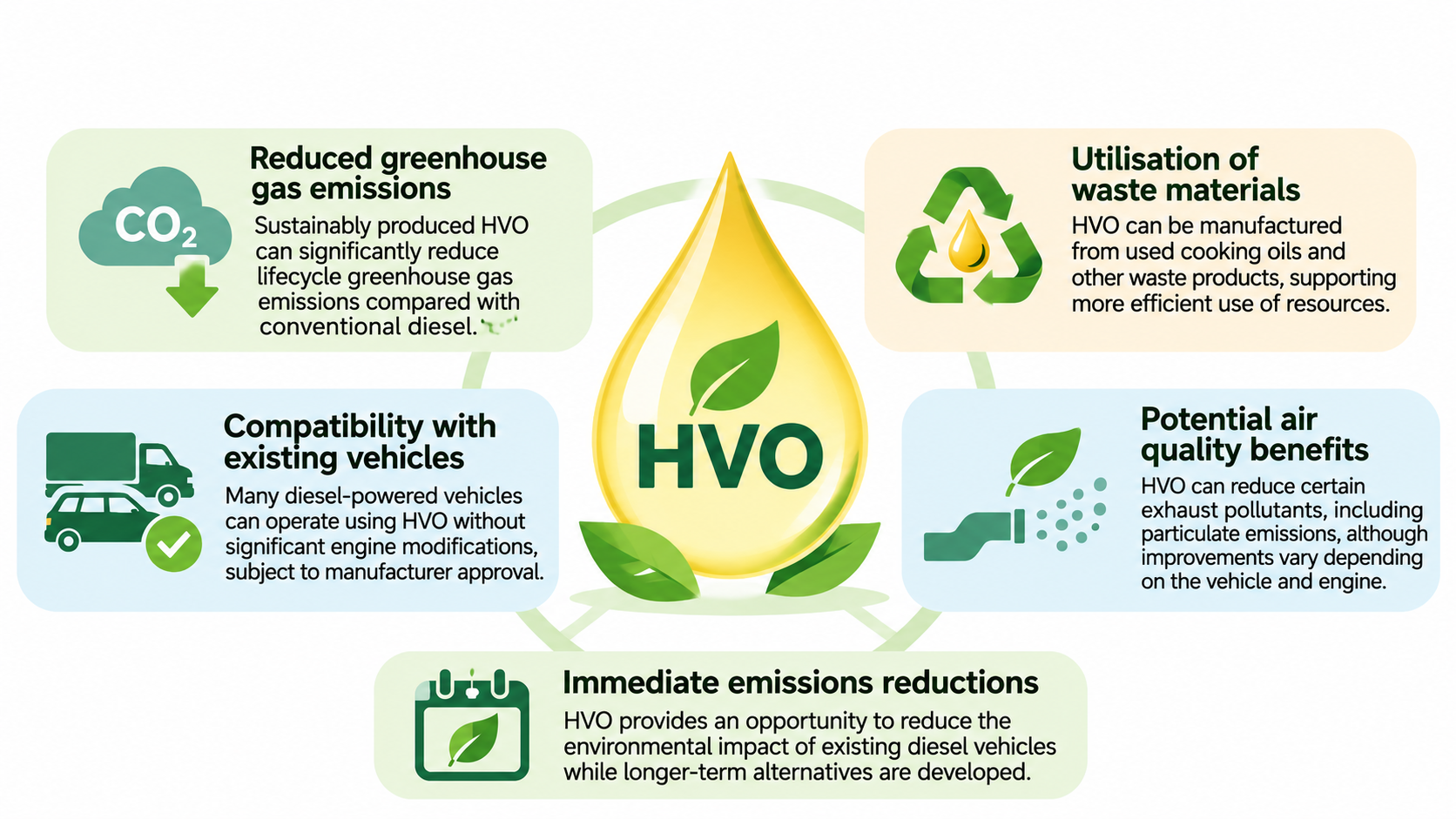
Hydrotreated Vegetable Oil (HVO) is a renewable alternative to conventional diesel, produced from organic materials such as used cooking oils, waste fats and other sustainable feedstocks.
Unlike conventional diesel, which is derived from fossil fuels, HVO can be produced from renewable sources. It offers a practical way to reduce greenhouse gas emissions from existing diesel-powered vehicles without the immediate need to replace them.
HVO is commonly referred to as a “drop-in fuel”, meaning it can be used in many existing diesel engines with little or no modification, subject to manufacturer approval.
When produced from sustainably sourced waste materials, HVO can deliver lifecycle greenhouse gas emission savings of up to approximately 90% compared with conventional diesel, depending on the materials used and the production process.
What are the benefits of HVO?
How is the Council using HVO?
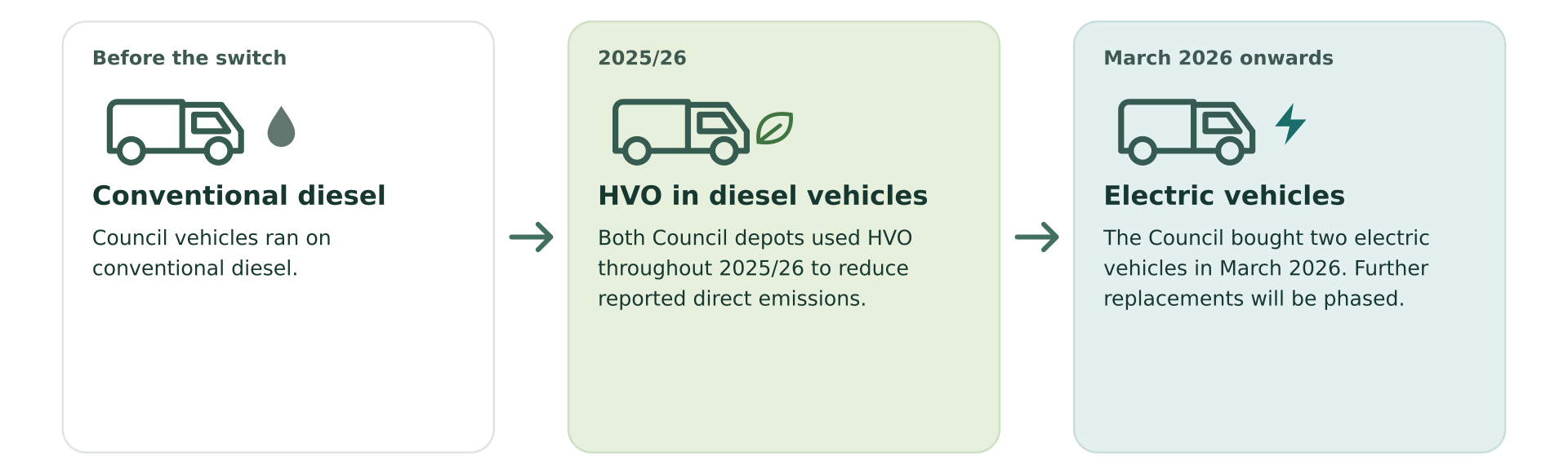
Fermanagh and Omagh District Council has introduced Hydrotreated Vegetable Oil (HVO) as part of its ongoing commitment to reducing greenhouse gas emissions from its operational fleet and supporting the transition towards net zero.
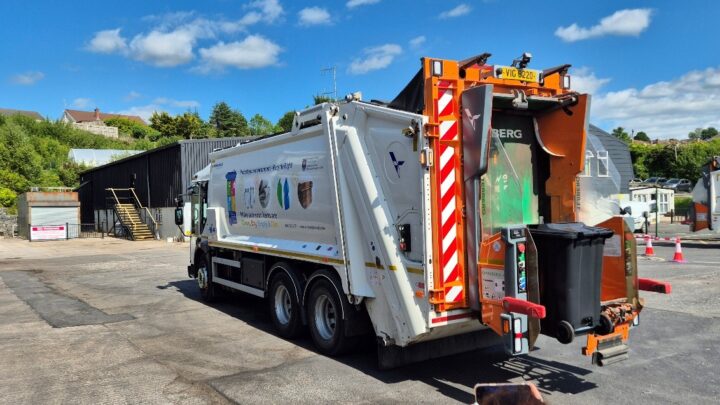
The Council initially trialled HVO within a selection of its diesel-powered vehicles, demonstrating its suitability as a lower-carbon alternative to conventional diesel. Following the success of this initiative, the use of HVO was expanded across the Council’s operational fleet, providing an opportunity to achieve substantial emissions reductions without the immediate need to replace existing vehicles.
During 2025/26, the Council’s fleet consumed 681,705 litres of HVO, resulting in an estimated reduction of 1,728.3 tonnes of CO₂ equivalent (tCO₂e) in reported direct greenhouse gas emissions compared with the equivalent volume of conventional forecourt diesel*.
This demonstrates the important role that alternative fuels can play in reducing the environmental impact of essential Council services, particularly for larger and specialist vehicles where zero-emission alternatives may not yet be operationally or economically viable.
* The estimated reduction compares the reported direct (Scope 1) emissions from 681,705 litres of HVO with those from the same volume of conventional forecourt diesel. It excludes emissions from fuel production and distribution and separately reported biogenic CO₂. The calculation uses the UK Government’s 2025 greenhouse gas conversion factors.
Supporting the transition to fleet electrification
While HVO provides significant emissions reduction benefits, the Council recognises that its use is a transitional measure rather than a long-term solution to achieving a net zero fleet.
The electrification of the Council’s vehicle fleet will be the primary means of achieving its longer-term decarbonisation ambitions. However, this transition presents a number of challenges, including the availability and cost of suitable electric vehicles, particularly for larger specialist vehicles, as well as the development of the necessary charging infrastructure.
To support this transition, the Council is progressing investment in electric vehicle charging infrastructure across its operational depots, alongside the ongoing assessment of opportunities to replace conventional diesel-powered vehicles with suitable electric alternatives.
In the interim, HVO will continue to play an important role in reducing emissions from existing diesel vehicles, particularly in areas where electrification is not yet technically or economically feasible.